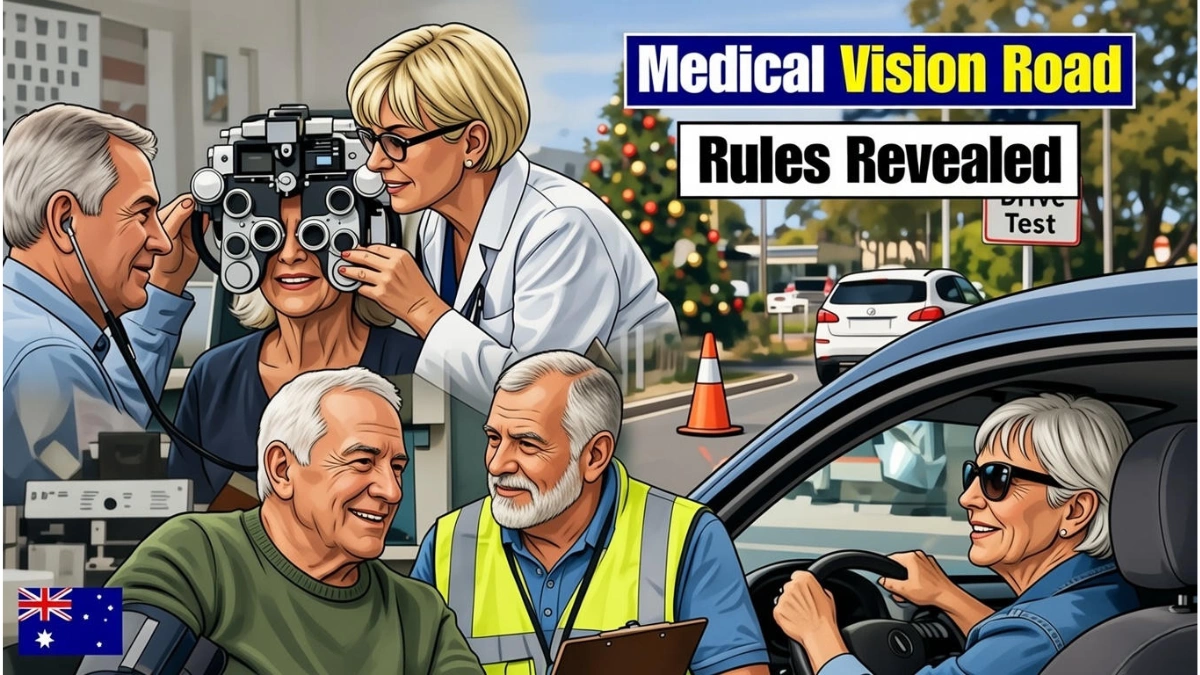
Australia is set to introduce a new senior driver assessment framework in 2026, bringing clarity and consistency to how drivers aged 65 and above keep their licences. Contrary to rumours of blanket bans, the updated approach confirms that seniors can continue driving—provided they meet medical, vision, and on-road safety standards.
The shift focuses on ability, not age, aiming to keep capable seniors mobile while strengthening road safety nationwide.
Why Australia Is Updating Senior Driver Rules in 2026
Longer life expectancy, better health outcomes, and an ageing population mean more Australians are driving safely well into later life. At the same time, governments want to reduce crash risk by identifying health or vision issues early.
The 2026 update modernises assessments so they’re targeted and proportionate, avoiding unnecessary restrictions while ensuring fitness to drive.

What the New Over-65 Driver Test Involves
The new framework does not introduce a single “one-size-fits-all” exam. Instead, it combines three checks that may apply depending on age, health history, and state rules.
Medical clearance reviews overall health and conditions that could affect driving. Vision testing checks eyesight standards essential for safe driving. On-road assessments are used only when required, typically if medical reports indicate concern or there’s a recent incident history.
Medical Assessment: What Doctors Will Check
Medical checks focus on conditions known to affect driving safety, such as vision disorders, cognitive changes, mobility limitations, and medication side effects. For most healthy seniors, this is a routine GP certificate, not a specialist process.
Doctors assess whether any condition needs monitoring, restrictions, or follow-up rather than automatically recommending licence loss.

Vision Test: Clear Standards, Simple Process
Vision testing confirms drivers meet minimum eyesight requirements. This may include distance vision and, in some cases, peripheral awareness. Corrective lenses are allowed if they bring vision within standards.
Many seniors pass easily, and those who need updated prescriptions can continue driving once corrected.
On-Road Assessment: When It’s Required
On-road assessments are not universal. They’re typically requested when medical findings raise questions or after a reported safety concern. The drive focuses on everyday skills—lane control, observation, intersections, and hazard response—rather than trick manoeuvres.
Passing confirms the driver’s real-world capability.

Key Rules Seniors Should Remember for 2026
• No automatic licence cancellation based on age
• Medical and vision checks form the foundation
• On-road tests only if needed
• Shorter renewal periods may apply after 65
• State rules still vary, but principles are aligned
Senior Driving Rules 2026 Snapshot
| Area | What Applies |
|---|---|
| Age Group | 65+ |
| Medical Check | Common requirement |
| Vision Test | Standardised |
| On-Road Test | Conditional |
| Renewal Cycle | Often shorter |
| Goal | Safety with independence |
State Differences Still Matter
Driver licensing remains a state and territory responsibility, so details can vary across NSW, Victoria, Queensland, WA, SA, and others. However, the 2026 approach aligns principles nationally while allowing local flexibility.
Oversight and guidance for services and benefits continue through Services Australia, while licensing is handled by state transport authorities.
What This Means for Seniors and Families
Seniors can plan with confidence knowing there’s no age cut-off. Families can support older drivers by helping schedule GP visits, eye tests, and—if required—practice drives ahead of renewal dates.

Preparation reduces stress and keeps licences active without interruption.
How to Prepare Before Your Next Renewal
Book a GP check early, update eye tests, keep medications reviewed, and stay active to maintain mobility and reaction times. If an on-road assessment is requested, consider a refresher lesson to build confidence.
Staying proactive makes renewals smoother.
Why This Change Matters Now
The 2026 update balances independence with safety at a time when seniors rely on driving for work, caregiving, and community life. By focusing on fitness rather than age, Australia supports mobility while protecting all road users.

Conclusion: The new 2026 senior driver rules confirm that over-65 Australians can keep their licences by meeting clear medical, vision, and—only when necessary—on-road standards. It’s a practical, fair system that rewards capability, preserves independence, and strengthens safety. Seniors who prepare early can continue driving with confidence.
Disclaimer: Specific requirements vary by state and individual circumstances. Drivers should check their local transport authority for exact renewal rules and timelines.